How to Check Car Oil Levels Safely
Table of Contents
Why Checking Your Oil Matters
Preparing Your Vehicle Safely
How Long to Wait Before Checking Engine Oil
Why Warm and Cool Readings Differ
What the Owner's Manual Actually Tells You
A Practical Rule When You Cannot Find the Manual
When Not to Check at All
How to Check Engine Oil with a Dipstick
Step 1: Confirm Your Vehicle's Method
Step 2: Open the Hood Safely
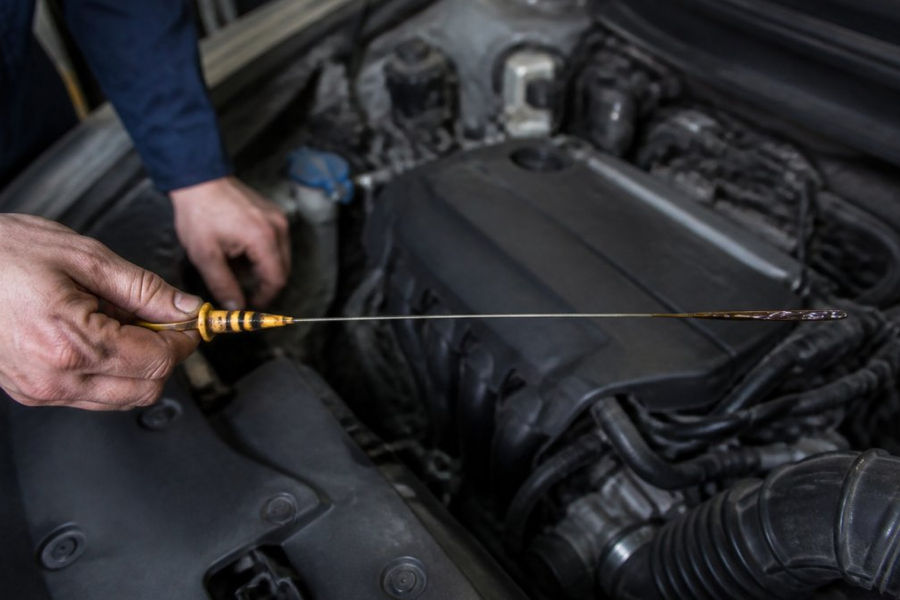
Step 3: Locate the Dipstick
Step 4: Remove, Wipe, and Reinsert
Step 5: Read the Level
Step 6: If Your Car Has No Dipstick
How to Read an Oil Dipstick
What to Do If Engine Oil Is Low
Cars Without a Dipstick: Electronic Oil Sensors
Common Mistakes to Avoid
Frequently Asked Questions
Last Updated: October 8, 2026
Why Checking Your Oil Matters
Engine oil lubricates moving parts, reduces friction, and prevents damage that could cost thousands to repair.
Many new drivers skip this check, assuming their mechanic handles it or waiting for a warning light.
Many young drivers learn too late that five minutes of checking costs nothing, while ignoring it can lead to engine failure costing thousands.
Here's what matters most: you can spot problems early.
Preparing Your Vehicle Safely
Before you check your oil, prepare your car correctly. Safety comes first.
Park on level ground.
Turn off the engine. Never check oil while it runs, you risk burns from hot metal and moving parts.
Engage the parking brake so the car won't roll.
Locate the hood release, usually under the dashboard on the left, and pull firmly until the hood unlatches.
Lift the hood and secure it with the prop rod or gas strut.
Pro Tip Always wear old clothes when checking oil. You may get grease on your hands or clothes. Bring paper towels or rags to wipe your hands afterward.
How Long to Wait Before Checking Engine Oil
Timing is the most misunderstood part of checking oil, it's why two drivers can check the same car and get different readings. The right answer is whatever your manufacturer specifies; the owner's manual overrides generic advice.
Why Warm and Cool Readings Differ
Oil drains. When the engine runs, the pump pushes oil through the galleries and filter; when you shut it off, gravity pulls that oil back into the pan. The dipstick reads the pan, so the reading depends on how much oil has drained back.
Cold engine (sitting overnight): essentially all oil has drained back, the highest and most repeatable reading.
Warm engine, checked immediately: much of the oil is still suspended in the upper engine and filter, so the dipstick reads low even when total volume is correct.
Warm engine, checked after the manufacturer's specified wait: oil has drained back to a known point, which is why many manuals specify this state.
That's why a warm reading that looks low isn't automatically a problem, and why topping up too soon causes overfilling.
What the Owner's Manual Actually Tells You
Open your owner's manual to the maintenance or "Engine Oil" section for one of three procedures:
"Check with the engine at operating temperature, then wait X minutes." Common wait windows are 5, 10, or 15 minutes. Follow the exact number.
"Check with the engine cold, before starting." Often specified where the dipstick is calibrated to a fully drained pan.
"Check via the electronic oil level display." Covered in the section on cars without a dipstick.
If the manual gives a wait time, that wait time is the procedure, a generic "wait five to ten minutes" can be wrong in either direction.
A Practical Rule When You Cannot Find the Manual
If you can't find the specification, use the cold-engine method for consistency:
Park on level ground overnight, or let the car sit at least 30 minutes after the last drive.
Check the level before starting the engine.
Record the reading at the same interval every time so readings are comparable.
The goal isn't a universal standard, it's comparing like with like. A consistent cold reading shows whether the level is trending down over weeks, which is the signal that matters.
When Not to Check at All
Immediately after a drive. The dipstick, tube, and exhaust components can burn skin. Wait the specified interval.
While the engine is running. Belts, the fan, and the alternator can catch clothing, jewelry, or hair. Never reach into a running engine bay.
On a slope. The pan isn't level, so the dipstick reads high on one side and low on the other. Move to flat ground first.
Watch Out Do not open the oil filler cap or pull the dipstick while the engine is hot and running. Pressurized hot oil can spray out and cause severe burns. Wait until the engine is off and has cooled for the interval your manual specifies.
Key Takeaway The manufacturer's procedure wins every time. If the manual says warm, wait the stated minutes. If it says cold, check before starting. When in doubt, use a consistent cold reading so your numbers are comparable week to week.
How to Check Engine Oil with a Dipstick
Not every car uses the same method. Before reaching for a dipstick, confirm which of three common configurations your vehicle has, the procedure differs for each.
Step 1: Confirm Your Vehicle's Method
Traditional dipstick. A yellow, orange, or red loop handle on the engine block or valve cover. Most vehicles built before the mid-2010s use this.
Electronic oil level sensor. No dipstick; the level shows on the instrument cluster or infotainment screen. Common on newer European and some domestic models.
Both. The dipstick is authoritative; the sensor is a convenience feature.
Confirm in the owner's manual's "Engine Oil" or "Maintenance" section, which also lists the correct oil specification, capacity, and any special procedure.
Step 2: Open the Hood Safely
Ensure the engine is off and the parking brake is set. Automatic: Park. Manual: leave it in gear.
Pull the hood release inside the cabin, usually under the driver's-side dashboard.
Lift the hood and secure it with the prop rod or gas strut. Never rely on your hand or a bystander.
Watch Out Keep hands, sleeves, jewelry, and hair away from the cooling fan, belts, and pulleys. Even with the engine off, the fan can run on some vehicles if the coolant temperature is high. Do not reach into the engine bay until you have confirmed the fan is not spinning.
Step 3: Locate the Dipstick
The dipstick isn't always in the same place. Common locations:
Front of the engine, near the radiator. Common on inline-four and V6 engines.
Side of the block, near the exhaust manifold. Common on some V8s.
Rear of the engine, near the firewall. Common on transverse-mounted front-wheel-drive engines.
The handle is typically yellow, orange, or red, shaped like a loop or T. Don't confuse it with the transmission dipstick (usually red, often unmarked on newer cars) or the oil filler cap (round, with an oil can symbol on the valve cover). If you can't find it, the owner's manual's engine bay diagram shows the exact location.
Step 4: Remove, Wipe, and Reinsert
Pull the dipstick straight up with steady pressure; twist slightly if needed. If stuck, wiggle gently, don't force it.
Wipe the tip clean with a lint-free rag or paper towel; residual oil smears the reading.
Note the two marks, typically "MIN" and "MAX," a crosshatched area, or two holes, defining the safe range.
Reinsert fully until it seats (a click or stop). A partially inserted dipstick reads high.
Wait a few seconds, pull it out slowly, and hold it horizontally to read.
Step 5: Read the Level
The oil film should end between MIN and MAX: at MAX it's full, between the marks it's safe, at or below MIN add oil.
Read twice, wipe, reinsert, read again. Differing readings mean the dipstick wasn't fully seated, the car isn't level, or oil is still draining back. Wait a few minutes and repeat.
Step 6: If Your Car Has No Dipstick
Electronic sensors work differently. The procedure is in the owner's manual, but the general pattern is:
Start the engine and let it reach operating temperature, or follow the manual's specified condition.
Turn the engine off and wait the specified interval (often 1 to 5 minutes) for oil to drain back.
Navigate the steering wheel or dashboard menu to "Oil Level" or "Engine Oil."
If the display shows low oil, add oil in small increments and recheck after each addition. Don't rely on the sensor alone, overfilling is as damaging as underfilling.
Pro Tip If your car has both a dipstick and an electronic sensor, trust the dipstick. Sensors can drift with age, and a failed sensor can read "OK" when the level is actually low.
Key Takeaway Confirm your vehicle's method first, dipstick, electronic sensor, or both. The dipstick procedure is remove, wipe, reinsert fully, read, and repeat. The electronic procedure is in the manual and varies by make. Never assume your car works like the last one you checked.
How to Read an Oil Dipstick
Reading the dipstick correctly tells you whether your oil level is safe. The oil should end between the minimum and maximum marks, at MAX it's full, between the marks it's fine.
Condition matters too. Fresh oil is light amber or clear; dark brown or black oil means an oil change is due soon. Dark oil still protects, but it's losing effectiveness.
Reading | What It Means | Action |
Oil at MAX mark | Tank is full | No action needed |
Oil between MIN and MAX | Safe level | No action needed |
Oil at or below MIN mark | Oil is low | Add oil immediately |
Oil is very dark or black | Oil is old | Schedule oil change soon |
Oil has sludge or debris | Oil is breaking down | Change oil within 500 miles |
What to Do If Engine Oil Is Low
Low oil means your engine isn't protected. Act quickly.
Check your owner's manual for the correct oil type, it lists viscosity and specification. Common types are 5W-30 and 10W-40; the wrong oil can damage your engine.
Locate the oil filler cap on top of the engine and twist it counterclockwise to remove it. Insert a funnel, pour one quart slowly, and wait a minute for it to settle. Reinsert the dipstick and check the level; if still low, add another quart and repeat until the level is between the minimum and maximum marks.
Watch Out Never overfill your oil tank. Too much oil can damage your engine seals and cause leaks. If you accidentally overfill, you must drain the excess. Take your car to a mechanic if this happens.
Cars Without a Dipstick: Electronic Oil Sensors
Some newer cars use electronic oil-level sensors instead of a dipstick, displaying the level on your dashboard.
Start the car and let the engine warm up for a minute.
If the display shows low oil, add the correct oil type until the reading is in the safe range. Some cars let you check without starting the engine: press the power button without turning it on and navigate to the oil level menu.
Common Mistakes to Avoid
New drivers make predictable mistakes when checking oil. Learn from them.
Checking a hot engine. Hot oil and metal burn skin badly.
Not wiping the dipstick clean. Old oil residue hides the new reading.
Using the wrong oil type. Mixing types or wrong viscosity damages your engine.
Overfilling the tank. Too much oil causes seal leaks and engine damage.
Ignoring dirty oil. Dark or sludgy oil loses protective power.
At Automotive Life Lessons, we teach young drivers that mastering this skill builds confidence and saves money.
Frequently Asked Questions
Should the engine be hot or cold when checking the oil?
Wait 5 to 10 minutes after turning off the engine for the most accurate reading. Checking oil on a completely cold engine can give a falsely high reading because oil settles in the pan overnight. Checking immediately after driving gives an inaccurate high reading because oil is still circulating. A warm engine, cooled briefly, gives the most reliable measurement of your actual oil level.
How do you read the minimum and maximum marks on an oil dipstick?
After reinserting the dipstick fully and removing it again, look at where the oil residue ends on the stick. Most dipsticks have two marks: a minimum (often labeled 'MIN') and a maximum (often labeled 'MAX'). Your oil level should be between these two marks, ideally closer to the maximum. If the oil doesn't reach the minimum mark, your engine is low on oil and needs topping up.
What should you do if the oil level is below the minimum mark?
Stop driving immediately and add the correct type of oil for your vehicle. Check your owner's manual for the specific oil grade (e.g., 5W-30). Add oil slowly in small amounts, then recheck with the dipstick after waiting a minute. Never overfill; oil above the maximum mark can damage your engine. If your oil drops frequently, have a mechanic inspect for leaks or internal issues.
Can you check engine oil while the car is running?
No. Always turn off the engine before checking oil. An running engine has moving parts under the hood that can cause injury, and the oil is circulating, making the reading inaccurate. Wait 5 to 10 minutes after switching off the engine, then perform your check on level ground with the engine cool enough to touch the dipstick safely.
Learning to check car oil levels safely is your first step toward becoming a confident, independent driver. Regular checks catch problems before they become emergencies. You'll know your car, trust your judgment, and avoid the financial hardships that catch unprepared drivers off guard. Get started with Automotive Life Lessons and master the essential maintenance skills that keep you safe on the road.
Book Online


Comments